Care
Keeping hand-embroidered lawn
Most embroidered suits are not worn out — they are washed out. Six habits that keep a piece looking the way it did the week it arrived.
12 August 20265 min read
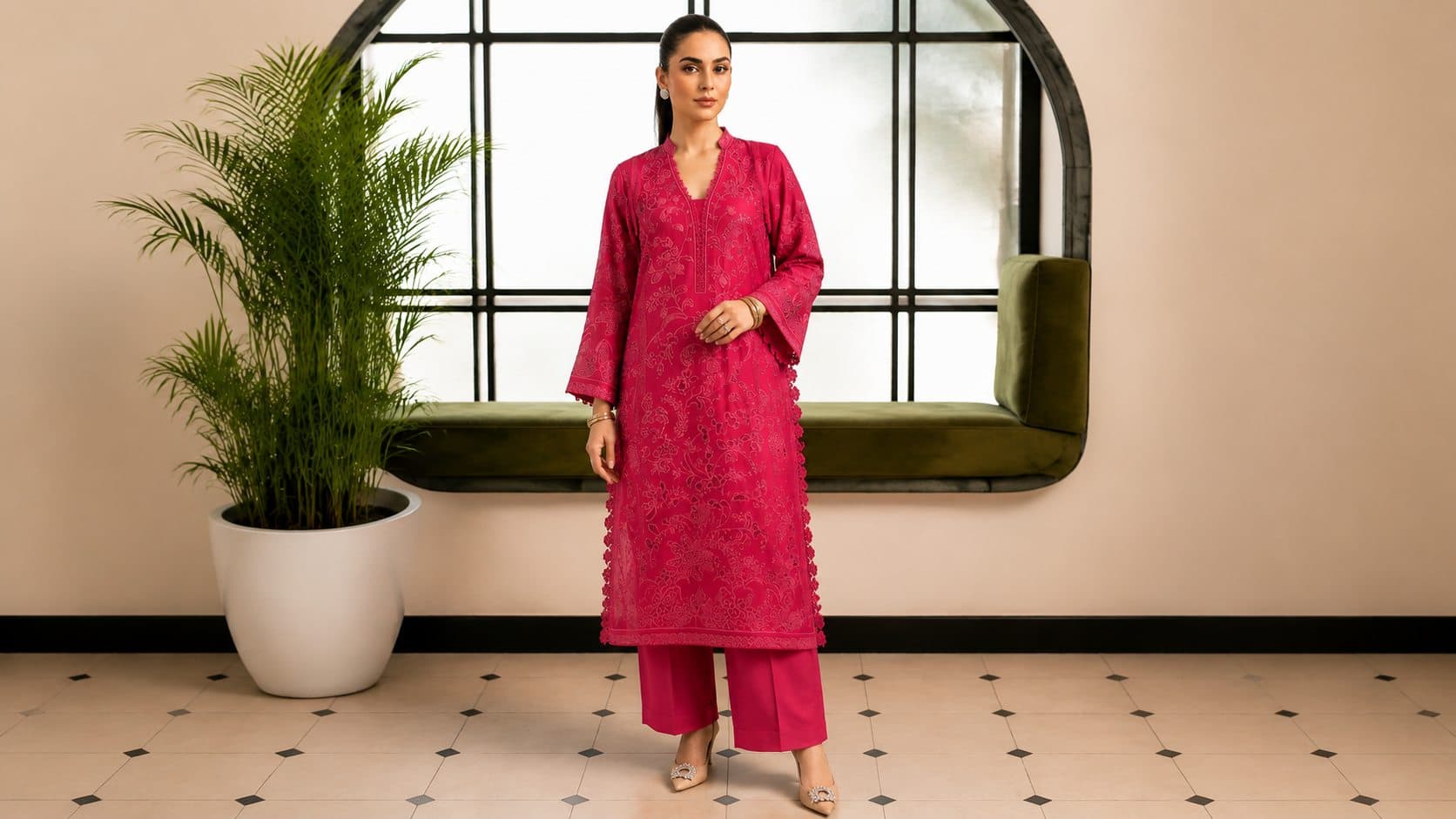
An embroidered lawn suit is two things stitched together: a cloth woven to be light, and a thread laid on top of it that is not. Nearly every way a suit is ruined comes from treating those two as one material.
Wash it cold, and wash it alone
Warm water opens the weave and loosens the tension the embroidery was worked at. Cold water, a mild detergent and a short cycle will lift a season of Karachi dust without touching the thread. Wash the suit on its own for the first three washes — a zip on a pair of jeans will find embroidery across a whole drum.
Turn the shirt inside out before it goes in. The friction of a machine falls on whatever faces outward, and that should be the ground cloth rather than the work.
Never wring, never hang wet
Wringing twists the ground under the thread and leaves puckers that no iron takes out. Press the water out between two towels instead, then dry the piece flat, or over a rail with the weight spread along its length. A wet shirt on a wire hanger will grow shoulders it was never cut with.
Dry in shade
Sunlight is the fastest way to lose a colour, and it takes the dyed thread before it takes the cloth. Shade, and a breeze, and an afternoon.
Iron on the reverse
Set the iron to cotton, turn the shirt inside out and press from the back, with a cotton cloth between the iron and any raised work. Zari and sequins will flatten permanently under direct heat — once they have lost their angle, they have lost the light.
Store it folded, not hung
A heavy three-piece hung for a season stretches at the shoulder. Fold it with the dupatta on top, in cotton or muslin rather than plastic, which traps moisture against the thread. The muslin bag a Luxury Pret suit arrives in is there for exactly this.
When in doubt, dry clean
Tissue, organza, net and anything with zari should go to a cleaner rather than a machine — the label on each product page says which. It costs less than the suit does.